
It’s Not Just About Growth
You’ll hear inflation come up everywhere, on the news, in market updates, even around the braai. But when it comes to investing, it’s not just background noise. It quietly determines whether you’re actually moving forward… or just standing still.
That’s why this is such an important concept to understand, especially if you’re serious about learning how the markets actually work.
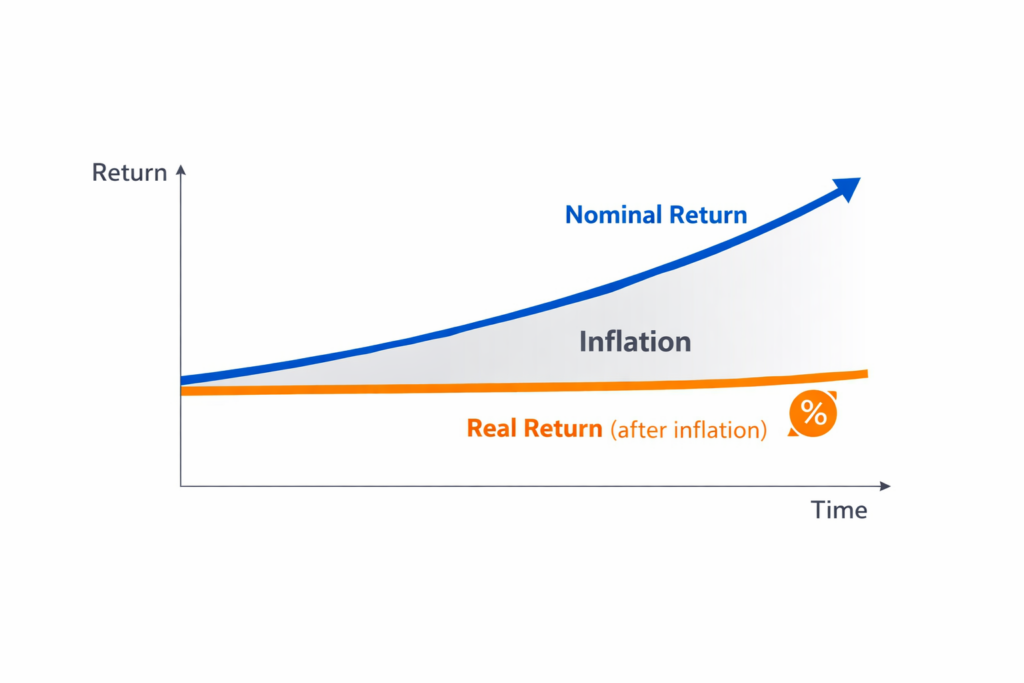
Most people look at their portfolio and think, “I’m up, so I’m doing well.” But that’s only half the story. What really matters is whether your money is growing faster than inflation. If it’s not, your wealth isn’t increasing in any meaningful way.
How Inflation Actually Reduces Your Returns
Here’s the simple truth: if your investments grow slower than inflation, you’re losing ground, even if it doesn’t feel like it.
For example, if your portfolio returns 8% and inflation sits at 6%, your real return is only 2%. That difference might seem small, but over time it compounds in a way that can significantly impact your financial future.
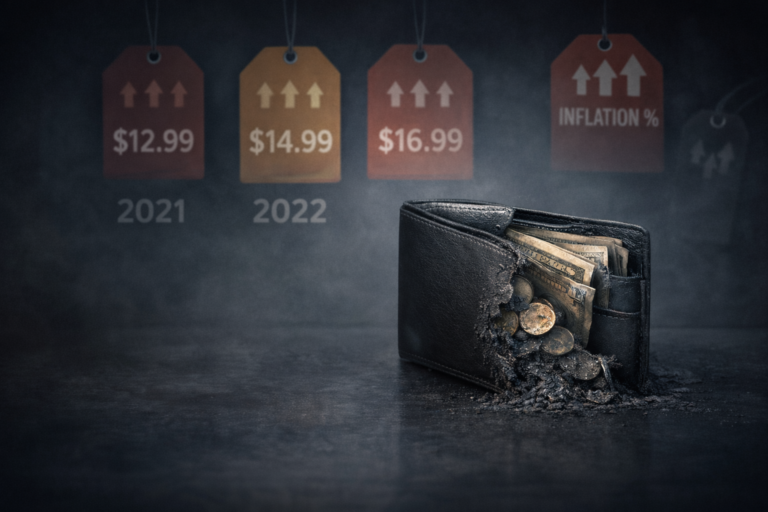
Inflation doesn’t hit all at once. It works gradually, eroding your purchasing power year after year. The result? Your money buys less, even though the numbers in your account are going up.
That’s where many investors get caught. They focus on growth, but ignore what that growth is actually worth, and that’s where understanding the market properly makes all the difference.
Why Savings Alone Won’t Protect You
Savings accounts feel safe, and in many ways, they are. Your balance increases steadily, and there’s no market volatility to worry about.
But there’s a problem.
If your savings earn 5% interest while inflation is running at 6%, you’re effectively going backward. It just happens quietly, without the ups and downs you’d see in the market.
It’s a bit like filling a bucket with a slow leak. At first, everything seems fine. But over time, the gap becomes impossible to ignore.
This is why relying only on saving, instead of investing, can limit your ability to build real wealth over the long term.
How Different Investments React to Inflation
Not all investments behave the same way when inflation rises, and this is where things start to get interesting.
Cash is the most exposed. It doesn’t grow meaningfully and steadily loses value over time.
Bonds can come under pressure, especially when interest rates increase. As rates rise, existing bonds often become less attractive.
Shares are more complex. Some companies struggle because their costs increase, squeezing their margins. Others manage to adapt by passing those costs on to customers.
Locally, you can see this play out clearly:
- Banks adjust lending rates as conditions change
- Retailers selling essentials often increase prices
- Energy and resource companies tend to benefit when commodity prices rise
Inflation doesn’t affect everything equally, it highlights which businesses are strong and which ones aren’t.
Where Inflation Creates Opportunity
While inflation is often seen as a problem, it also creates opportunity for investors who know what to look for.
Tougher conditions tend to expose weak businesses. Companies that can’t control costs or maintain margins start to struggle. On the other hand, strong businesses stand out, they maintain pricing power, protect profits, and continue operating effectively.
This creates clarity.
Markets may become more volatile, but they also become more honest. You start to see which companies are truly resilient, and that’s where long-term opportunities often come from.
The key is knowing what to look for, and how to apply that understanding in real market conditions.

Interest Rates and Market Reactions
When inflation rises, central banks usually respond by increasing interest rates. The goal is to slow down spending and bring inflation back under control.
Higher rates make borrowing more expensive, which cools down economic activity.
But here’s something many investors overlook: markets don’t wait for official announcements.
They move based on expectations. By the time interest rates are adjusted, markets have often already reacted. That’s why you’ll sometimes see prices fall or rise before any formal decision is made.
Understanding this helps you avoid reacting too late, or making decisions based purely on headlines.
Thinking Long-Term in an Inflationary World
Trying to outguess inflation in the short term is extremely difficult. It’s influenced by global events, currencies, interest rates, and economic cycles.
If you chase every movement, you’ll likely end up overtrading and second-guessing your decisions.
The better approach is to focus on the long term.
Over 10 or 20 years, what matters most is whether your investments consistently grow faster than inflation. That’s how real wealth is built, not by reacting to every shift, but by staying invested in quality opportunities over time.
What Smart Investors Focus On
As investors gain experience, their mindset starts to shift.
The question changes from:
“Did I make money?”
To:
“Did I stay ahead?”
Smart investors focus on:
- Businesses that can handle rising costs
- Diversifying their investments to manage risk
- Staying patient when markets become noisy
They also understand something important: individuals don’t move markets.
Large forces do, global capital flows, economic conditions, institutional investors, and yes, inflation.
Recognizing this helps remove emotion from decision-making and keeps the focus on what really matters.
Final Thought
Inflation is always there, whether you’re actively thinking about it or not.
Ignore it, and it quietly works against you.
Understand it, and you start to see things more clearly, where the risks are, where the opportunities lie, and how to position yourself for the long term.
Because at the end of the day, investing isn’t just about growing your money…
…it’s about making sure it still holds its value when you actually need it.
FAQs
- Why does inflation matter to investors?
Because it determines whether your investment returns are truly increasing your purchasing power. In simple terms, inflation refers to the rise in prices over time, which reduces what your money can actually buy.
- Can you make money during inflation?
Yes. Investing in the right assets, especially strong companies, can help you outperform inflation.
- Is saving money enough during inflation?
No. Savings often don’t keep up with inflation, which means your money loses value over time.
- Which investments perform best during inflation?
Shares in strong companies, commodities, and certain property investments often perform better.
- Should I change my investment strategy during inflation?
Not drastically. Focus on long-term growth and quality investments rather than reacting short-term.
- How do I know if I’m beating inflation?
Compare your investment returns to the inflation rate. If your returns are higher, you’re ahead.